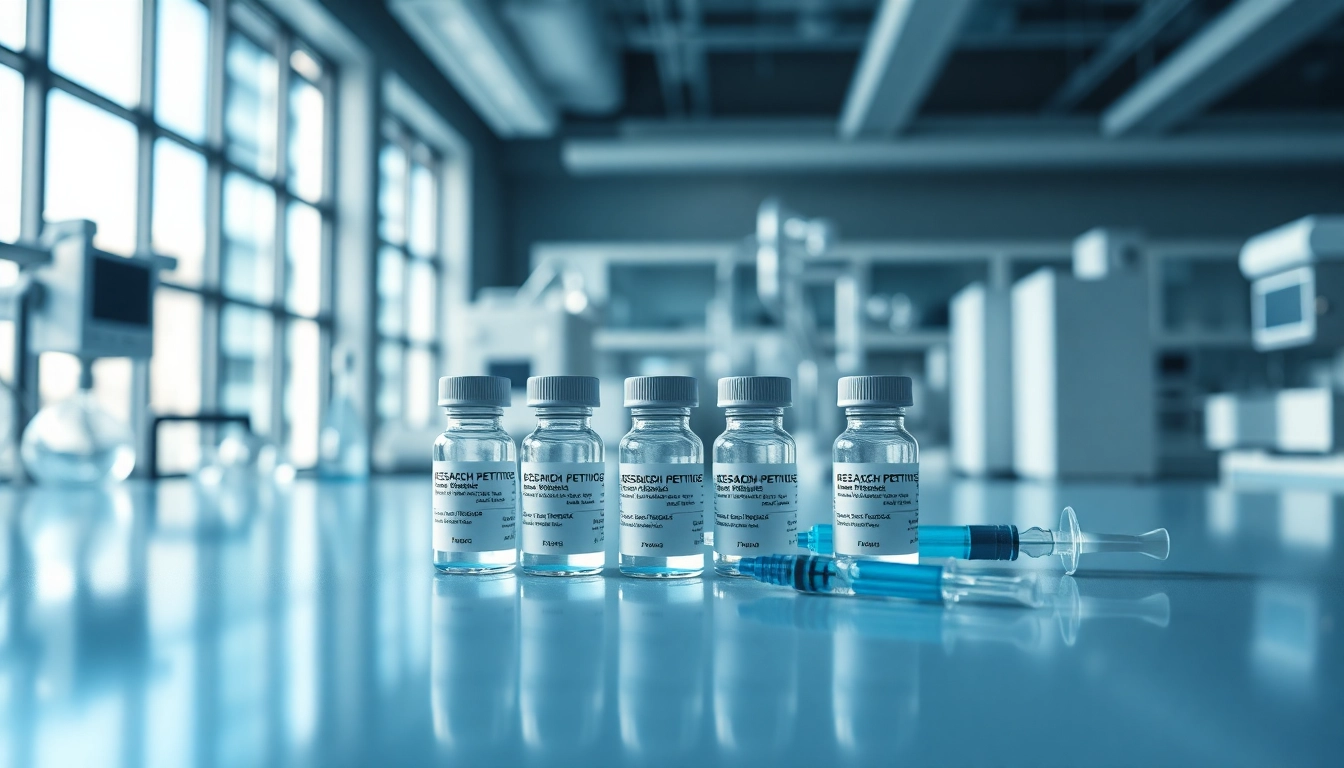
Understanding Peptides and Their Applications
Peptides are short chains of amino acids linked by peptide bonds and serve as the building blocks for proteins. They play critical roles in various biological functions ranging from hormone regulation to immune response modulation. In recent years, the application of peptides has extended into diverse fields, particularly in research, where they are utilized for therapeutic advancements, bioengineering, and biomolecular studies. To ensure these applications are successful, understanding the concept of compound purity is paramount.
What Are Research Peptides?
Research peptides are synthetic or natural peptides studied within laboratory settings for their potential therapeutic applications and biological effects. Unlike traditional pharmaceuticals, peptides can act on specific biological pathways due to their relatively small size and unique structure. They are especially relevant in drug development, as they can mimic naturally occurring signaling molecules in the body, leading to precise targeting of cellular functions.
Common Uses of Peptides in Science
The versatility of peptides allows for a broad spectrum of applications in scientific research. They are frequently employed in:
- Drug Development: Peptides serve as leads for developing new medications, especially in oncology and metabolic disorders.
- Diagnostic Tools: Specific peptides can aid in the diagnosis of diseases, acting as biomarkers in various assays.
- Therapeutic Agents: Many peptides possess biological activity that can be utilized to create treatments for conditions including osteoporosis, diabetes, and cancer.
- Vaccine Development: Peptides are used to create subunit vaccines that effectively train the immune system.
The Importance of Peptide Quality
Peptide quality is crucial as it directly affects the efficacy and safety of the resultant products. Poorly synthesized peptides can introduce variability and errors in research, leading to misleading results. Consequently, ensuring high-quality peptides through rigorous purification processes becomes essential for successful experimentation and therapeutic outcomes.
Factors Affecting Compound Purity in Peptide Production
Several factors can significantly influence the purity of compounds in peptide production. Understanding these factors can help researchers and manufacturers improve processes and outcomes.
Synthesis Techniques and Their Impact
The method used for synthesizing peptides can greatly affect their purity. Traditional methods like solid-phase peptide synthesis (SPPS) have been foundational in generating high-purity peptides. However, advances in automated synthesis technologies now allow for greater precision and yield. Notably, thorough optimization of synthesis parameters—such as reagents, solvents, and temperature—can minimize the formation of side products, thereby enhancing purity.
Contaminants and Quality Control
Contaminants ranging from residual solvents to unintended byproducts can compromise peptide quality. Establishing stringent quality control (QC) protocols throughout the production process is vital. Techniques such as high-performance liquid chromatography (HPLC) and mass spectrometry are frequently employed for detecting and quantifying contaminants, ensuring that final products meet the necessary purity standards.
Analyzing Compound Purity Metrics
Understanding and analyzing purity metrics is integral to assessing peptide quality. Metrics might include:
- Percent Purity: A direct measurement indicating the proportion of the intended peptide versus impurities.
- Identity: Confirmation that the synthesized peptide is the target molecule.
- Impurity Profile: An analysis detailing the types and amounts of impurities present.
Regularly employing these metrics helps maintain a consistent quality standard, essential for both research and therapeutic applications.
Testing Methods for Peptide Purity
Accurate testing methods are essential for determining the purity of peptides. The following are commonly used techniques in the assessment of peptide composition:
Chromatography Techniques Explained
Chromatography remains a cornerstone technique for peptide purification and analysis. In particular, HPLC separates compounds based on their interaction with a stationary phase. By optimizing conditions such as flow rate and elution solvent, researchers can effectively separate desired peptides from impurities, yielding high-purity products suitable for further analysis and application.
Mass Spectrometry in Quality Assessment
Mass spectrometry (MS) provides powerful analytical capabilities to confirm peptide identity and quantify impurities. By measuring the mass-to-charge ratio of ionized particles, MS can effectively distinguish between different molecules, allowing researchers to validate the presence and purity of targeted peptides rapidly.
Importance of Reproducibility in Testing
Reproducibility is essential for establishing the reliability of test results. Consistent application of testing methods and adherence to strict QC protocols are vital in achieving reproducible results. Implementing a systematic approach across production and testing can mitigate variability and enhance confidence in the derived findings.
Challenges in Ensuring High Compound Purity
Despite advancements in synthesis and testing methods, several challenges persist in achieving high compound purity. Understanding these challenges is vital for researchers and manufacturers alike.
Common Pitfalls in Peptide Synthesis
Some common pitfalls that can lead to lower compound purity include:
- Poor Reaction Conditions: Inadequate temperatures or times can result in incomplete reactions.
- Improper Cleavage: Inefficient removal of protecting groups may leave residual impurities.
- Suboptimal Storage: Degradation during storage due to moisture or light exposure can lower purity.
Addressing these issues demands attention to detail and adherence to established protocols.
Strategies for Mitigating Risks
To counteract the challenges associated with peptide synthesis, implementing strategic measures is essential. This may involve:
- Routine Training: Regularly training staff on best practices for synthesis and purification can minimize human error.
- Process Audits: Conducting systematic audits can help identify process inefficiencies that impact quality.
- Use of High-Quality Reagents: Sourcing high-quality starting materials can significantly enhance overall compound purity.
By fostering an environment focused on quality, organizations can greatly improve their outcomes.
Case Studies on Purity Failures
Real-world case studies have illustrated the pitfalls associated with inadequate purity measures. In one notable instance, a peptide-based therapeutic failed during clinical trials due to high levels of impurities that were overlooked during initial testing. This outcome not only halted the drug's progression but also highlighted the need for stringent adherence to quality assurance practices throughout the synthesis and testing phases.
Future Trends in Peptide Research and Quality Assurance
The field of peptide research and production is continually evolving, with several promising trends emerging:
Innovations in Synthesis Techniques
Emerging synthetic techniques, such as wave-assisted synthesis, are gaining traction. These innovations enable researchers to produce peptides more efficiently while maintaining high purity levels. The integration of advanced robotic systems for peptide synthesis and purification is expected to further streamline the production process, reducing human error and enhancing quality outcomes.
The Role of Automation in Quality Control
Automation is increasingly becoming an essential part of QC processes. Automated systems for peptide synthesis and analysis can deliver reproducible results while minimizing variability. These systems allow for continuous monitoring and real-time adjustments to maintain the highest standards of compound purity throughout production.
Regulatory Developments Shaping the Industry
The regulatory landscape surrounding peptide production is also evolving. As the demand for peptides in therapeutic applications grows, regulatory bodies are sharpening their focus on purity and quality benchmarks. Compliance with these regulations is essential for manufacturers, necessitating rigorous testing and documentation practices that ensure the highest possible standards.
FAQs About Peptide Purity
What is compound purity in peptide synthesis?
Compound purity refers to the percentage of the desired peptide in comparison to impurities in the final product. High purity levels are crucial for the effectiveness and safety of peptides in research and therapeutic applications.
How is peptide purity tested?
Peptide purity is commonly tested using chromatography techniques like HPLC and analytical methods such as mass spectrometry, which identify and quantify the presence of impurities.
What factors affect peptide synthesis quality?
Factors affecting peptide synthesis quality include the choice of synthesis method, reaction conditions, quality of reagents, and the efficiency of purification processes.
Why is it crucial to have high compound purity?
High compound purity is crucial because impurities can lead to adverse reactions, inaccurate research results, and ineffective therapeutic outcomes in clinical applications.
What are common challenges in ensuring peptide purity?
Common challenges include poor reaction conditions, human error, the presence of contaminants, and inadequate quality control measures during synthesis and testing.